When teenagers from four countries write things like “I realised my English is better than I thought”, “sometimes complete strangers can become really good friends” and “I learned how easy it is to connect with people from different countries”, it gives a pretty clear answer to why Erasmus+ youth exchanges matter.
From 18 to 25 August, we hosted and coordinated OUTspoken Europe in Antalieptė, Lithuania. The project brought together 39 young people, mostly aged 14–17, and their group leaders from Lithuania, Czechia, Hungary and Slovenia. We organised it together with VÍKEND z.s. from Czechia, YOPA from Hungary and Zavod Ambitia from Slovenia.
We were not staying in a hotel or in a standard youth exchange venue, but in an old monastery in Antalieptė, with thick authentic walls, worn plaster in places, long old corridors and quite a strong gloomy monastery aesthetic. You can see that in the photos too: the walls are not “unfinished project accommodation”, they are part of the character of a very old building. Judging from the feedback, for some participants this became one of the most memorable parts of the place. One Slovenian participant wrote that although some people might be freaked out by the monastery, they absolutely adored it and would return “in a blink of an eye”.
And during the last days of the project, nature decided to add something of its own. During one of the strongest storms Lithuania had seen in around 20 years, Antalieptė lost electricity, and for a while we also had no running water. The project did not stop. We had a generator, adapted, and continued the programme. One participant later wrote in the feedback that during those more difficult hours people actually communicated with each other even more. It was definitely not something we had planned into the Erasmus programme, but situations like that show very quickly whether four separate national groups have already become one group.
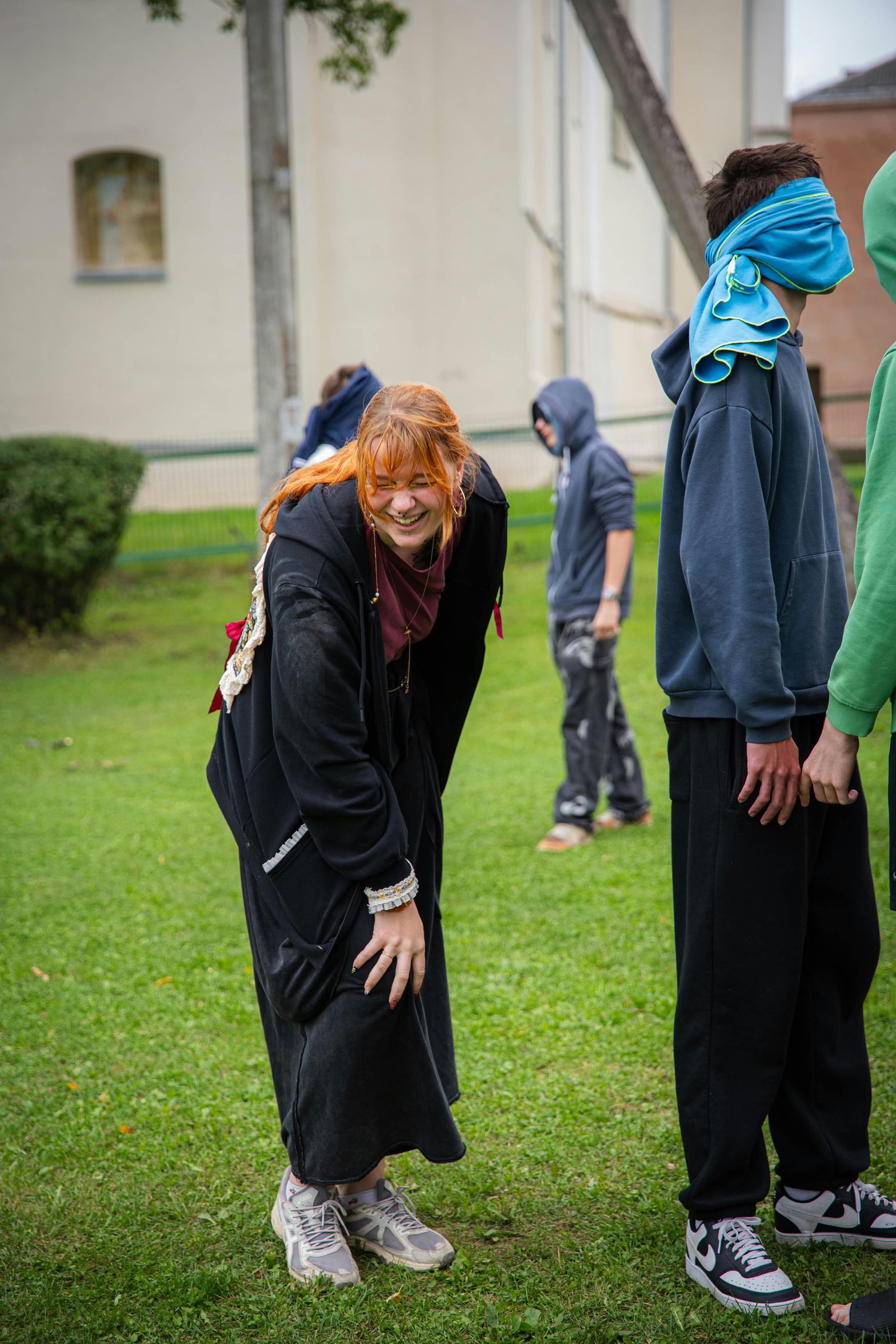
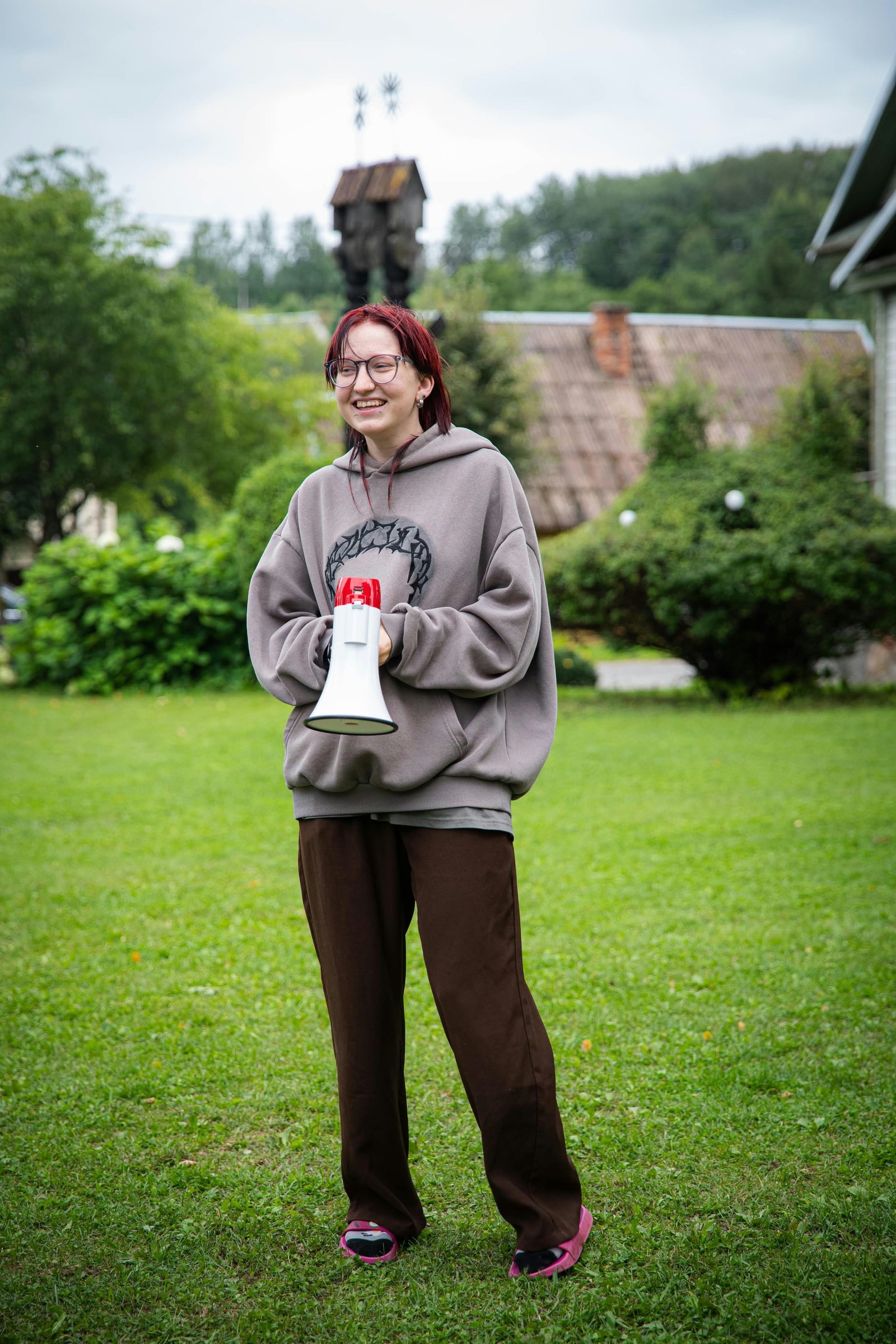
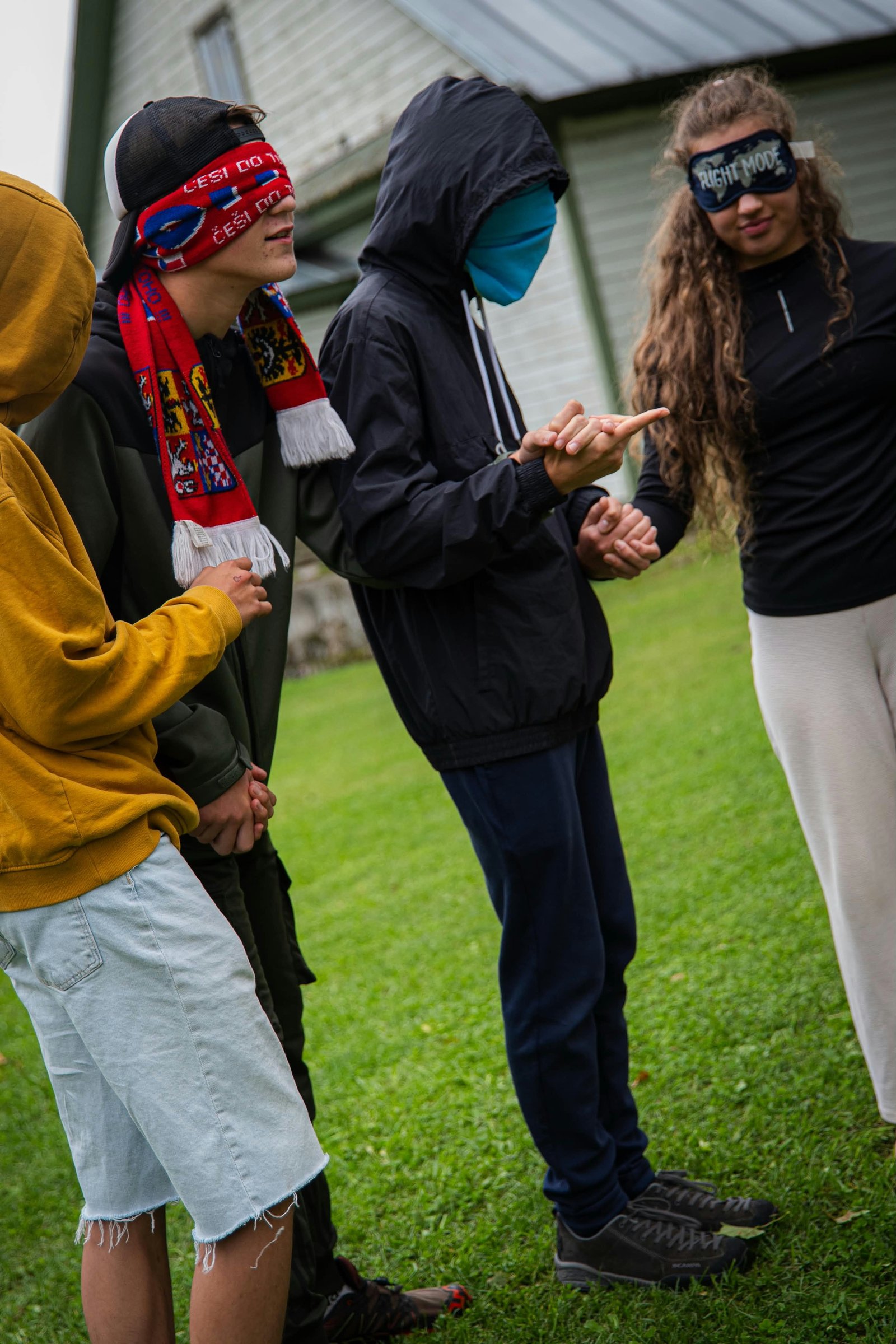
An Erasmus+ youth exchange in the youth sector means groups of young people from several countries living and learning together, but the learning looks very different from school. There are no grades and no tests. Instead, there are mixed international teams, practical tasks, discussions, games, creative activities, hikes, cultural evenings, daily reflection and a lot of moments when you have to start talking to someone you would not even have known how to approach a day earlier.
In OUTspoken Europe, we worked a lot with identity, belonging, language, differences between people, privilege, inclusion, safe spaces and what a young person can actually do when they notice someone being left out. English was not treated as a subject you have to “speak correctly”, but simply as a tool for connection. One day focused more on language and communication, another on identity and belonging, safe spaces and allyship, another on nature and wellbeing. In the evenings, all four countries shared parts of their culture, and groups were constantly mixed so that Czechs would not stay only with Czechs, Lithuanians only with Lithuanians, and so on.
And if you tried to guess which parts young people remembered most, you could probably come up with very serious educational answers. The evaluation was much simpler. Out of 24 participants who completed the final survey, 18 selected cultural evenings among the parts of the programme that stayed with them most. Team-building activities, the hike and nature activities also came up repeatedly, and, somewhat to our own surprise, Lithuanian polyphonic singing did too.
The answers became even more interesting when we asked not about activities, but about what they were taking home with them.
“I realised that my English is better than I thought.” – Czechia
“Sometimes complete strangers can become really good friends.” – Lithuania
“I learned that I can communicate confidently in English and simply start conversations with other people.” – Hungary
“I learned to appreciate different cultures and saw how easily people from different countries can connect through communication.” – Hungary
“I became more confident speaking in front of people.” – Slovenia “I learned that you can always ask someone for help and they will not judge you.” – Slovenia
“You can make better friends in six days than in ten years.” – Czechia
The numbers tell the same story in a slightly drier way. 20 out of 24 participants who completed the final evaluation rated the overall OUTspoken Europe experience 4 or 5 out of 5. 19 said they had made a real connection with someone from another country. 19 felt more confident using English after the exchange, and 18 said the project helped them understand something new about identity, difference, privilege or inclusion.
That is probably why, in youth exchanges, we are usually most interested not only in how young people perform in a specific activity, but in what happens between the activities. Who sits next to whom at dinner. Who barely speaks on the first day and by the fourth day is already approaching a group from another country on their own. Who realises that you don’t need perfect sentences to communicate in English. Who leaves in tears, already having someone in another European country whom, just a week later, it will feel completely natural to message every day.
That is what youth exchanges are all about.
OUTspoken Europe was funded by the European Union’s Erasmus+ programme.
VšĮ Anglų kalbos studija (LT)
VÍKEND z.s. (CZ)
YOPA (HU)
Zavod Ambitia (SI)